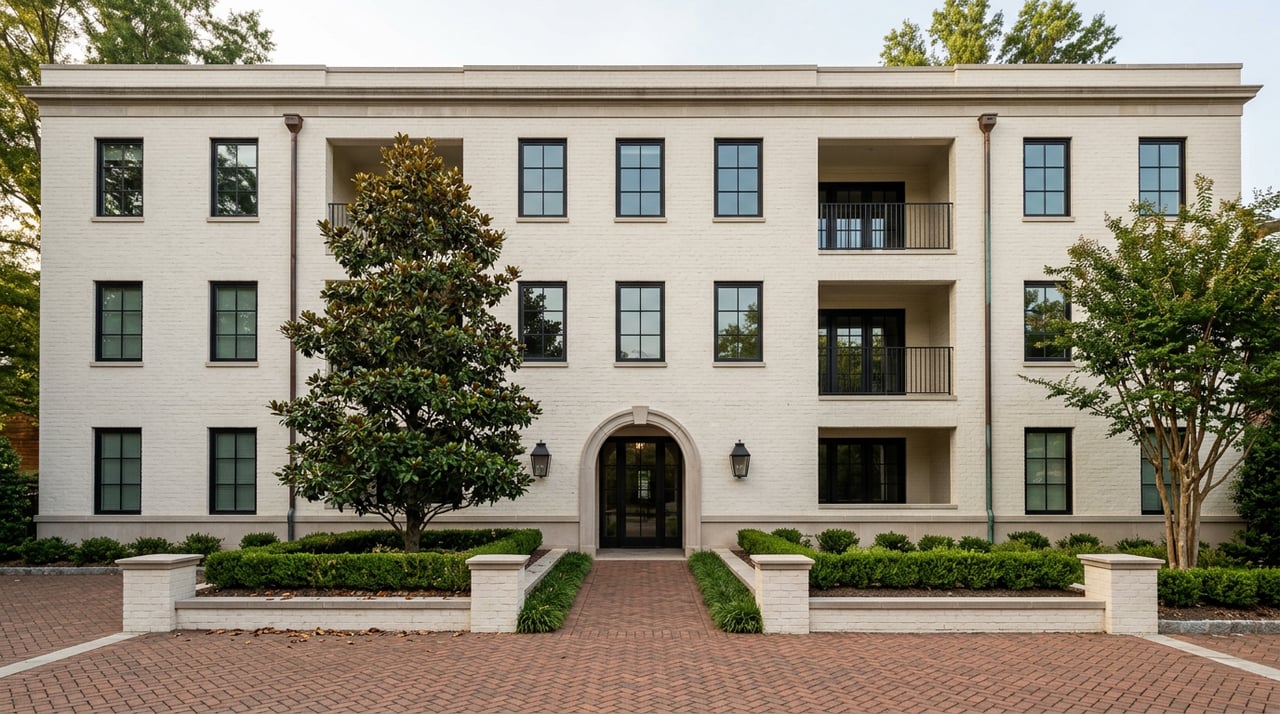
Dunwoody Condo Special Assessments and Reserve Fund Risks
September 10, 2026
September 10, 2026
Georgia gives a condo buyer real protection in exactly one situation: buying a brand new unit from the developer. State law forces that seller to hand over the declaration, the bylaws, the current budget, and every long-term management contract, then gives the buyer seven days to walk away if any of it is missing. Buy the same kind of unit two years later from the person who lived in it, and none of that is automatic. You have to ask for it yourself.
That gap matters more in Dunwoody right now than it has in years, because Dunwoody is running both playbooks at once. The Perimeter corridor has a wave of new condominium construction working through approvals, while the established condo stock around Ashford Dunwoody Road and Perimeter Mall, much of it now old enough to need real capital repairs, keeps changing hands with far less paperwork forcing the issue.
O.C.G.A. §44-3-111 spells out exactly what a condo seller has to furnish before a residential sale closes: the floor plan, the declaration and every amendment, the articles of incorporation and bylaws, any management or maintenance contract running longer than a year, and the current operating budget itemized down to reserves for deferred maintenance and reserves for depreciation. Until the buyer has all of it in hand, the contract stays voidable. A missing document keeps the clock from starting.
That's a meaningful protection. It's also written to apply most cleanly to a condominium's initial sale, the kind a developer runs when a building first comes to market or converts from another use. It doesn't create a matching disclosure regime for the resale that happens years later, when an individual owner sells a unit that's been through several boards, several budgets, and possibly several deferred repairs.
The other half of the statute, O.C.G.A. §44-3-107, tells you why that gap is worth caring about. It requires a condo association's annual budget to include line items for deferred maintenance and depreciation reserves, and it requires master insurance at full replacement cost with minimum liability coverage. What it does not require is that those reserve line items add up to anything close to what the building will actually need. A board can legally list a token reserve contribution for a decade without breaking any law, right up until the year it can't anymore.
Ashford Condominiums, a gated 72-unit mid-rise on Ashford Circle, was built in 2000. Prescott at Park Place, across from Perimeter Mall, dates to 2006 and holds 110 units. Georgetown at Perimeter Walk and Sterling of Dunwoody round out the older condo inventory near the same corridor. These are the buildings most Dunwoody condo buyers are actually looking at, and every one of them is now old enough that roofs, elevators, and mechanical systems are somewhere on the replacement clock.
None of those transactions come with the forced document package or the seven-day window that a new-construction sale carries. A buyer has to specifically request the declaration, the current budget with reserve line items, recent board minutes, and any pending assessment notice. Nothing compels the seller or the association to hand those over unprompted, and nothing in Georgia law checks whether the reserve number in that budget is remotely adequate for the building's age.
This isn't a hypothetical risk. Sterling of Dunwoody's own community website currently lists a "2024 HOA Fees & Special Assessment" item right alongside its declaration and bylaws. Whatever the specifics, an established Dunwoody condo community has, within the past two years, disclosed a special assessment to its own owners on its own site. That's the exact scenario a reserve line item is supposed to prevent, playing out in the same submarket where new condo construction is now breaking ground.
Two blocks of Dunwoody's Perimeter Center East corridor illustrate the other side of this. Workspace Property Trust has proposed converting the 14-story office tower at 64 Perimeter Center East into 169 condominiums, paired with 101 townhomes and 119 age-restricted apartments planned for 66 Perimeter Center East next door. Dunwoody's City Council approved the multifamily and townhouse piece at 66 Perimeter Center East in September 2025, and public discussion has pointed to construction starting sometime in early 2026.
A few miles away, GID's $2 billion High Street project finished its first phase in late 2024, delivering roughly 600 apartments, 150,000 square feet of retail, and new loft office space around a shared central lawn near the Dunwoody MARTA station. High Street's later phases are planned to bring condominiums into the mix, according to the developer's own project materials and the city's economic development page, though ground hasn't broken on that piece yet.
When those units eventually sell, whoever buys the first round from the declarant gets the full protection of §44-3-111. Documents furnished up front. Seven days to void the contract if anything's missing. It's the strongest disclosure position a Georgia condo buyer can be in, and it will apply to units in buildings that don't have twenty years of deferred maintenance behind them yet, because they won't have existed for twenty years.
Layer one more piece onto this. Georgia's legislature passed Senate Bill 406, the Property Owners' Bill of Rights Act, by a 51-0 vote in the Senate and 155-10 in the House in March 2026, and Governor Brian Kemp signed it into law as Act 715. The Act eventually requires every homeowners association, property owners association, and condominium association in the state to register with the Secretary of State, raises the minimum delinquency threshold for foreclosure from $2,000 to $4,000, sets a strict order for how payments get applied to a delinquent account, and requires ten years of assessment and lien records to be kept and open to state inspection.
Almost none of that is required yet. Only the attorney-fee and pre-collection notice provisions took effect, on July 1, 2026. Everything else, the registration system, the new foreclosure threshold, the payment-application order, the ten-year records requirement, doesn't become mandatory until January 1, 2027.
That means anyone closing on a Dunwoody condo this fall is buying into a transition year. Some boards are already tightening collections policies and reserve documentation ahead of the deadline. Others have no legal reason to touch anything until next January. There's no way to tell which kind of association you're joining just by looking at the dues number on a listing sheet.
A few things are worth requesting outright, whether the unit is a 2006-built resale or a pre-construction reservation at a new Perimeter development:
None of this requires a lawyer to read. It requires asking for documents that Georgia law makes optional in exactly the transaction where most Dunwoody condo buyers are standing.
Does the seven-day rescission window apply if I'm buying a resale unit, not a new one? The statute is written around the seller furnishing specific documents before the sale closes, and it applies most directly to a condominium's initial sale by the developer. A resale doesn't come with the same automatic package, so the practical version of that protection is simply requesting the same documents yourself before you remove contingencies.
What exactly has to be in a Georgia condo association's reserve line item? The budget has to itemize reserves for deferred maintenance and reserves for depreciation as separate categories. There's no requirement for a specific dollar figure or a professional reserve study behind those numbers, so the line item can exist and still be underfunded.
When does the rest of SB 406 actually apply to my association? The attorney-fee and pre-collection notice rules are already in effect as of July 1, 2026. Registration, the new $4,000 foreclosure threshold, the payment-application order, and the ten-year records requirement all take effect January 1, 2027.
Dunwoody's condo market is genuinely two markets right now, one built on decades of board decisions nobody was required to disclose, the other about to be built under a disclosure rule that only applies once. Knowing which one you're buying into is worth ten minutes of asking before it's worth thousands of dollars of finding out. If you're comparing a resale unit against something in the new Perimeter pipeline, Taylor Thompson can walk through what each building's documents actually show before you write an offer.
Stay up to date on the latest real estate trends.
Finding the right real estate agent can make all the difference, and I’m dedicated to providing the warm, professional, and informative service you deserve. Let’s connect and discuss your goals.